

How Do I Make Money Online as a Beginner?
The Short Answer
You can make money online as a beginner by selling a skill you already have, such as writing, design, or simple admin help, or by selling things you no longer need. Pick one simple service, set up a profile on a trusted platform, and take small jobs first. Most beginners earn a small amount at the start, and income grows slowly as reviews and repeat clients build up. There is no fast path to a full income, and anyone who promises one is probably selling you something.
Start With What You Already Know
You do not need a new degree or an expensive course to start. Most beginners earn their first money online with skills they already use at work, at school, or at home. Before you look at platforms, make a short list of what you can already do.
Ask yourself these questions:
- Can you write clearly, for example emails, social media posts, or simple articles?
- Can you design simple graphics, edit photos, or make short videos?
- Are you organised, and good at data entry, scheduling, or answering messages?
- Do you know a school subject well enough to explain it to someone else?
- Do you have a hobby, such as cooking, crafts, or fixing things, that other people value?
Pick the one skill on your list that other people would pay for. One clear skill is easier to sell than five vague ones. You can add more services later, once the first one is working.
Five Beginner Friendly Ways to Start
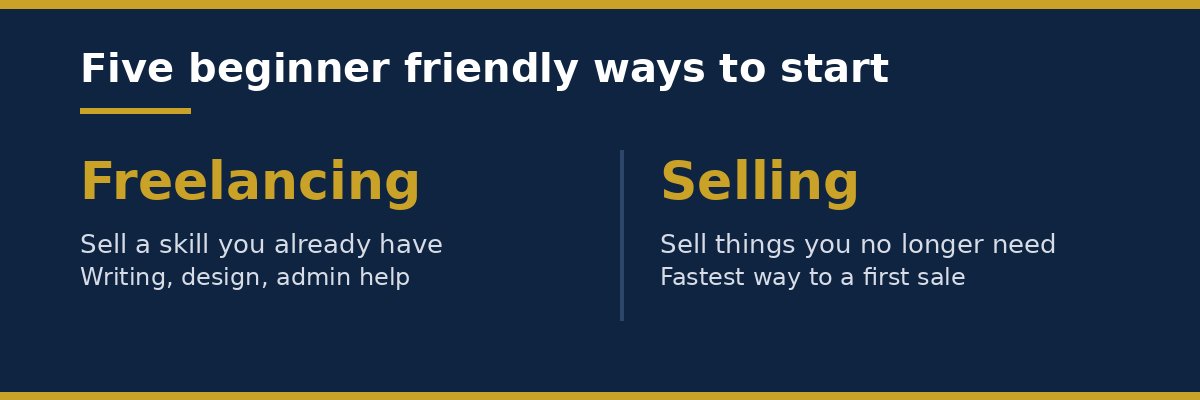
Not every online income idea suits a beginner. The five below need little or no money to start, and they let you learn as you go.
1. Freelance Services
Freelancing means doing short jobs for clients, such as writing, graphic design, data entry, virtual assistance, or translation. You agree the work and the price with each client, and you get paid when the work is done.
Freelance platforms connect beginners with clients and hold the payment until the job is finished, which protects both sides. Start with small jobs at a modest price, do them well, and ask for a review. Good reviews bring the next client.
To start, write a short profile that says what you do, who it helps, and what a client gets. Add two or three examples of your work, even if they are practice pieces you made for yourself. A clear profile beats a long one.
2. Selling Things You No Longer Need
Selling items you already own is often the fastest way to make your first money online, because there is no client to find and no new skill to learn. Look around your home for clothes, books, electronics, or furniture in good condition that you no longer use.
Take clear photos in good light, write an honest description, and set a fair price by checking what similar items sell for. Sell on a well known marketplace with buyer protection, and be honest about any wear or damage. A clear listing and a quick reply to questions will sell more than a clever title.
This is a one off income, not a steady job, but it teaches you the basics of pricing, photos, and customer messages. Some people later turn this into a small reselling habit, buying low and selling for a little more, but that takes time and care, and it is not a guaranteed profit.
3. Tutoring or Teaching Online
If you know a subject well, you can teach it online. School subjects, music, languages, and basic computer skills are all in demand. You do not need to be an expert. You need to be one step ahead of your student and able to explain things in plain words.
Start with one subject and one age group. Prepare a simple lesson plan, agree the time and price in advance, and use a video call tool you both trust. A short free trial lesson can help, but limit it to 15 minutes, so your time is respected.
4. Creating Content
Some beginners earn money by writing a blog, making videos, or posting useful content on a topic they know well. This can grow into income from ads, affiliate links, or selling a simple product, but it is the slowest of the options here. A new blog or channel usually earns nothing for months.
Treat content as a long term project, not a quick income. Pick a topic you can write about for a year and publish on a regular schedule. If you need money soon, start with freelancing or selling instead, and build content on the side.
5. Small Online Tasks
Some websites pay for small tasks, such as surveys, testing a website, or sorting data. These jobs are simple, but the pay is very low, often a few dollars an hour at most. They can be a way to earn a little pocket money, but they rarely grow into a real income.
Be honest about the time involved. If a task pays one dollar and takes 20 minutes, that is three dollars an hour. Your time may be better spent learning a skill that pays more, and never pay to join a task site.
A Worked Example: Your First Freelance Job
Numbers make a plan feel real. Here is a small, realistic example of a first freelance writing job.
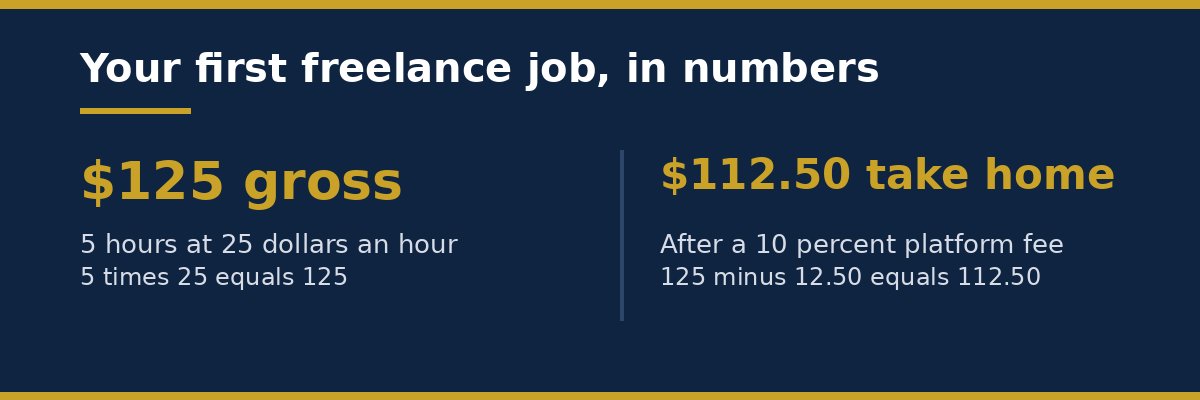
Suppose you offer simple blog writing at 25 dollars an hour, and a client hires you for 5 hours of work in one week.
- Hours worked: 5
- Hourly rate: 25 dollars
- Gross pay: 5 times 25 equals 125 dollars
Now suppose the freelance platform charges a 10 percent fee on the job.
- Platform fee: 10 percent of 125 dollars equals 12.50 dollars
- Take home pay: 125 dollars minus 12.50 dollars equals 112.50 dollars
So 5 hours of work at 25 dollars an hour leaves you with 112.50 dollars after the platform fee, or 22.50 dollars per hour after the fee. That is a useful first result, and it shows why the fee matters. A higher fee, or unpaid time spent looking for work, would lower the real hourly pay further.
One job like this each week would be about 450 dollars a month before any other costs. That is helpful extra income, but it is not a full salary, and it would take more clients, higher rates, and steady work to grow it. Set your expectations from the math, not from a promise in an ad.
How to Get Your First Client or Sale
Getting the first client is the hardest part. These steps keep it simple.
Step 1: Choose one service and one audience. For example, simple blog writing for small business owners, or data entry for busy professionals. A clear offer is easier to buy than a general one.
Step 2: Make a simple sample. Write a short article, design a simple graphic, or prepare a sample spreadsheet. A sample proves you can do the work, even before you have a client.
Step 3: Set a fair starting price. Look at what other beginners charge for the same work, and price near the lower end at first. You can raise your price as reviews come in. Do not work for free beyond one small sample, and do not accept work that pays nothing with a promise of exposure.
Step 4: Apply for small jobs every day. Send a short, personal message for each job. Say what you can do for that client, in your own words, and link to your sample. A few thoughtful applications beat many copy and paste messages.
Step 5: Deliver on time and ask for feedback. Finish the work when you promised, check it before you send it, and ask the client if anything needs fixing. Then ask politely for a short review. A good review is worth more than a slightly higher price on the next job.
Step 6: Keep track of your money. Write down every job, the amount, the fee, and when you were paid. A simple spreadsheet is enough, and good records make tax time much easier.
Learning to control spending is part of making extra money count. A guide on how to stop impulse buying can help you keep more of what you earn, and a look at the best way to save money shows where small savings add up.
Watch Out for Scams
Wherever beginners look for online income, scams follow. Knowing the warning signs will save you money and time.
Be careful if a job or course:
- Asks you to pay a fee to start work, or to buy a starter kit before you earn anything
- Promises a large income in a few days with little work
- Asks for your bank login, passwords, or a copy of your ID before any work is agreed
- Uses pressure, such as saying the offer ends today if you do not pay now
- Has no real company name, no contact details, and no reviews from real people
A real client pays you for work. You do not pay a client to work. If an offer feels rushed or too good to be true, stop and check it before you send money or personal details. A quick search for the company name plus the word scam or review can reveal problems other people have already found.
What About Tax?
Money you earn online is usually still income, even if it comes from a small side job. The rules depend on where you live, so check the guidance for your own country or state. In the United States, the Internal Revenue Service has guidance for self employed people, including freelancers, on its self employed individuals tax center. Read it before your first tax year as a freelancer, and keep the records mentioned above, since they are what you will need.
If your earnings grow, consider talking to a qualified tax professional in your area. This article cannot give tax advice, and tax rules change, so use official sources and professional help for your own situation.
A Simple 30 Day Starter Plan
A plan with small daily steps is easier to follow than a big goal. Here is one you can start this week.
Week 1: Choose and prepare. Pick one skill, write a short service description, and make one or two samples. Set up a profile on one trusted platform, or a simple page describing your service.
Week 2: Apply and list. Apply for three small jobs, or list five items for sale. Keep each application short and personal. Note what you applied for and when.
Week 3: Do the work. Complete your first job or sale carefully, deliver on time, and ask for a review. Fix any problems quickly and politely.
Week 4: Review and repeat. Look at what worked, which applications got replies, and what price felt fair. Do more of what worked, and set a small goal for the next month.
If nothing worked in the first month, that is normal, not a failure. Change one thing, such as your price, your sample, or the type of job, and try again. Most beginners need a few tries before the first paid job lands.
Small savings habits help while income is still growing. A guide on how to save money on groceries shows one place where many households can cut costs without feeling deprived.
FAQ
How much money can a beginner make online?
It depends on your skill, the time you give it, and the clients you find. Many beginners earn nothing in the first weeks, then a small amount, such as 50 to 200 dollars a month, from a few small jobs. A steady income takes months of regular work and good reviews. Anyone who promises hundreds of dollars a day for a beginner is not being honest.
Do I need money to start making money online?
Most of the options in this guide need little or no money to start. Freelancing needs your time and a device with internet access. Selling items you own needs no new purchase. Be careful of any method that asks you to pay a large fee before you earn anything.
Which online income idea is best for a complete beginner?
Freelancing a skill you already have is usually the best first step, because you can earn from your first job. Selling things you own is also a good first step, and it is the fastest way to make a first sale. Content creation is better as a long term side project than as a first income.
How do I get paid for online work?
Most freelance platforms pay through their own payment system, then you withdraw the money to a bank account or a payment service. Agree the payment method and the timing before you start work, and never start a large job without a written agreement on price and payment.
Is making money online safe?
It can be, if you use trusted platforms, never pay to start a job, and never share passwords or bank logins. Check reviews, use payment methods with protection, and keep records of every job. If an offer feels wrong, walk away. There will be another one.
Should I quit my job to work online?
No, not at the start. Keep your regular income while you test online work on the side. Only consider working online full time once you have steady clients, several months of income, and savings to cover slow months. A simple plan for future money, such as the one in what is a simple first investment plan, can wait until your income is steady, and learning what is a brokerage account is useful only once you have money you can afford to set aside.
Conclusion
Making money online as a beginner is possible, but it is slower and smaller at the start than most ads suggest. Pick one skill you already have, offer one clear service, take small jobs, and build reviews one at a time. Sell things you no longer need for a quick first win, and treat content as a long term project. Keep clear records, watch out for scams, and check the tax rules where you live.
The goal is not a quick fortune. It is a small, steady side income that grows as your skill and reputation grow. Start small, stay consistent, and let your own records tell you when to aim higher. If you plan to set money aside from what you earn, you may also want to read about how to open a bank account online so your earnings have a safe place to land.
This article is for general information and education only. It is not legal or financial advice.
