

What Side Income Can I Start With No Skills?
The Short Answer
Yes, you can start side income with no special skills. The work that fits a beginner is simple, useful work that people will pay for: cleaning, walking dogs, helping someone move, doing basic data entry, running errands, or selling things you no longer need.
No skill does not mean no effort. It means the training is short, the tools are simple, and you can learn the job in a day or two. What matters is reliability: showing up on time, doing the job properly, and replying to messages quickly. That is what gets you repeat work and referrals.
Start with one idea, try it for a month, and keep only what actually pays. Avoid anything that asks you to pay to start, promises fast money, or needs you to recruit other people.
What “No Skills” Really Means
It means no degree, no certificate, and no years of practice. It does not mean no strengths. If you are organised, patient, strong, friendly, or good with a phone, those are strengths you can sell.
The simplest side income uses one of these: your time, your hands, your car, or your home. Time based work, such as dog walking or cleaning, pays for hours. Hands based work, such as assembling furniture, pays for a finished job. Car based work, such as deliveries, pays per trip. Home based work, such as selling unused items, pays when something sells.
Our guide What Is the Simplest Side Income for Beginners? covers the easiest starting points.
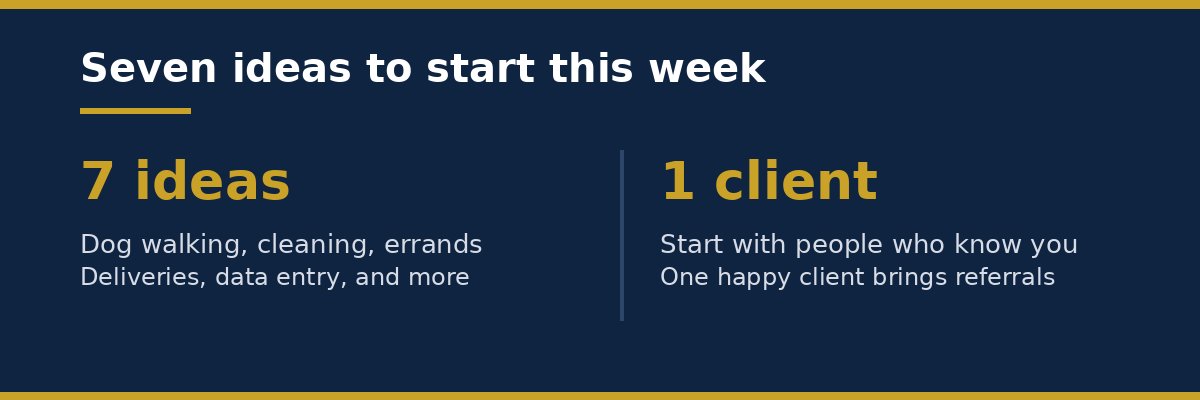
Seven Ideas You Can Start This Week
1. Dog Walking and Pet Sitting
Owners pay for walks, feeding, and company while they are at work or away. You need to like animals, be reliable, and know the area. Start with neighbours and friends, then ask for referrals. You will need to be comfortable handling different dogs, so start with calm, small dogs if you are new to it.
2. Cleaning and Tidying
Homes, offices, and holiday rentals all need cleaning. You need basic supplies, a checklist, and care with other people’s belongings. Many cleaners are paid per visit, not per hour, so being efficient raises your real hourly pay. Ask the client what matters most to them before you start.
3. Errands and Odd Jobs
Some people pay for help with shopping, queueing, collecting parcels, or small tasks they have no time for. You need a phone, transport, and a clear price for the job. Agree the price and the time before you start, and keep receipts for anything you buy for them.
4. Selling Things You Own
Look around your home for clothes, books, games, and gadgets you no longer use. Selling them online or locally turns clutter into cash and teaches you how pricing and buyers work. This is a one off income, not a steady job, but it is the fastest way to make your first money.
5. Basic Data Entry and Admin Help
Small businesses often need help typing lists, copying information into spreadsheets, or sorting emails. You need a computer, patience, and care with details. Start with short test tasks, and only take on work you can finish by the agreed time.
6. Delivery and Courier Work
Food and parcel delivery apps let you work when you choose, using a car, bike, or scooter. You need transport, a phone, and the right documents for your area. Earnings vary a lot by time of day and location, so track your hours and fuel costs before you decide if it pays.
7. Babysitting and Child Minding
Parents pay for trusted help, usually in the evenings or on weekends. You need to be responsible, calm, and good with children. Start with families who know you, and be clear about your hours, your rate, and what you will and will not do.
A Worked Example: Three Hours a Week
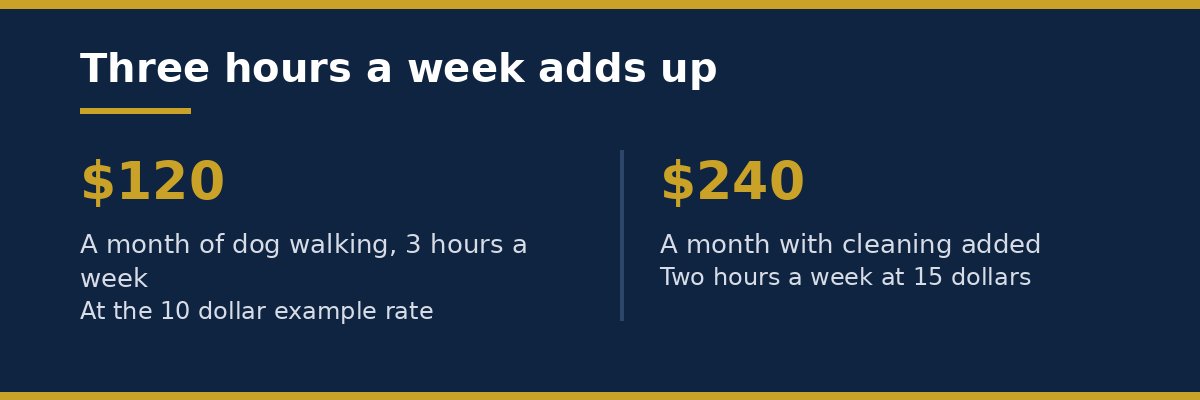
Here is a simple example with round numbers. Suppose you walk dogs for three hours a week, and you charge 10 dollars per hour as an example rate. Your weekly income is 3 hours times 10 dollars, which is 30 dollars.
Over four weeks, that is 30 dollars times 4, which is 120 dollars. Over a year, at the same pace, that is 120 dollars times 12, which is 1,440 dollars.
Now suppose you add a second job, cleaning for two hours a week at 15 dollars per hour as an example rate. That is 2 hours times 15 dollars, which is 30 dollars a week, or another 120 dollars a month. Together, the two jobs bring 240 dollars a month, or 2,880 dollars a year, from five hours a week.
These rates are examples, not promises. Real rates depend on your area, your experience, and the client. The point of the example is the method: hours times rate, times weeks, gives you a clear picture before you start. Track your real numbers after your first month and compare.
How to Get Your First Client Without Experience
Start With People Who Know You
Your first clients are usually neighbours, friends, family, or coworkers. Tell them plainly what you can do and when you are free. One happy client who recommends you is worth more than a hundred adverts.
Offer a Short Trial
If you are new, offer a short trial at a fair price, such as one cleaning visit or one week of dog walks. A trial lowers the risk for the client and gives you a first review.
Be Easy to Reach and Easy to Trust
Reply to messages quickly, confirm the time and the price in writing, and arrive when you said you would. Ask the client at the end of the job if they were happy, and if they were, ask if they know anyone else who needs help.
Our guide How Do I Find My First Freelance Client? covers finding clients in more detail, and How Do I Turn a Skill Into Side Income? shows how to build on what you already know.
What to Avoid
Pay to Start Schemes
If a job asks you to pay for a starter kit, training, or access before you earn anything, step back. Real clients pay you, not the other way round.
Get Rich Quick Promises
Any advert promising hundreds of dollars a day with no skill and no work is a warning sign. Real side income grows slowly, from hours and repeat clients.
Work With No Agreement
Always agree the job, the price, and the time before you start. A short written message is enough: the job, the price, and the date. It protects both sides if anything is unclear later.
Our guide How Do I Avoid Side Income Scams? lists the common warning signs.
How to Grow From No Skills to Some Skills
Once you have your first clients, you start learning. A dog walker learns animal care, a cleaner learns what clients value, and a data entry helper learns spreadsheets. After a few months, those small skills let you charge more or take on better work.
Pick one skill to improve on purpose. If you do admin help, learn spreadsheet basics. If you deliver, learn the busiest times and routes. If you clean, learn how to quote jobs well. One small skill, learned properly, can lift your rate more than a dozen new ideas.
Our guide Side Income Ideas for Beginners: Filter by Time, Cost, and Skill helps you compare ideas before you commit.
FAQ
Can I really earn side income with no skills at all?
Yes, for simple work such as cleaning, dog walking, errands, and deliveries. These jobs need reliability and care, not a certificate. You will learn the skills as you work, and your rate can rise as you gain experience.
How much can a beginner earn?
It depends on your area, your hours, and the work. A few hours a week at a modest rate can bring 100 to 300 dollars a month as an example range, but no one can promise a figure. Track your own hours and pay for a month, then decide if the work is worth your time.
Do I need to pay to start?
No. The ideas in this article need little or no upfront cost. If someone asks you to pay for a starter kit, training, or access, treat it as a warning sign and walk away.
Should I tell my employer about side income?
Check your job contract and your local rules. Some employers restrict outside work, and side income may need to be reported for tax. Keep records of what you earn from the start.
How do I set my price with no experience?
Look at what similar work costs in your area, start at a fair beginner rate, and raise it as you gain reviews and repeat clients. Always agree the price before the work starts.
What if I fail at my first idea?
Try another one. Most beginners test two or three ideas before one fits. A failed try costs little if you keep the cost low and the hours short, and each try teaches you what you do and do not enjoy.
Conclusion
No special skill is no barrier to side income. Simple, useful work, done reliably, is what people pay for. Pick one idea from this list, find one client, and do the job well. Then do it again.
After a month you will know the real hours, the real pay, and whether the work suits you. That is more useful than any list. Start small, stay honest about the numbers, and let one small skill grow into the next.
Further reading
This article is for general information and education only. It is not legal or financial advice.
