
How Do I Save Money on Groceries?
Yes, you can save money on groceries without eating worse food or skipping meals. The simple method is to plan your meals, shop with a list, and buy only what you will use before it goes bad. Most food budgets leak in small amounts: an extra trip, a snack bought on impulse, or fresh food that is thrown away at the end of the week. Fix those three leaks and the savings add up fast.
A food budget is one of the few parts of a household budget you can change this week. Rent and loan payments are fixed, but the grocery bill is a choice you make every time you shop. This guide explains how to plan meals, how to shop with a list, how to compare prices, and how to cut waste, with a worked example you can copy.
Start With Your Current Food Spending
Before you change anything, find out what you spend now. Look at your bank or card statements for the last month and add up every food shop, including supermarkets, corner shops, and takeaway food. Many people are surprised by the total, because small shops are easy to forget.
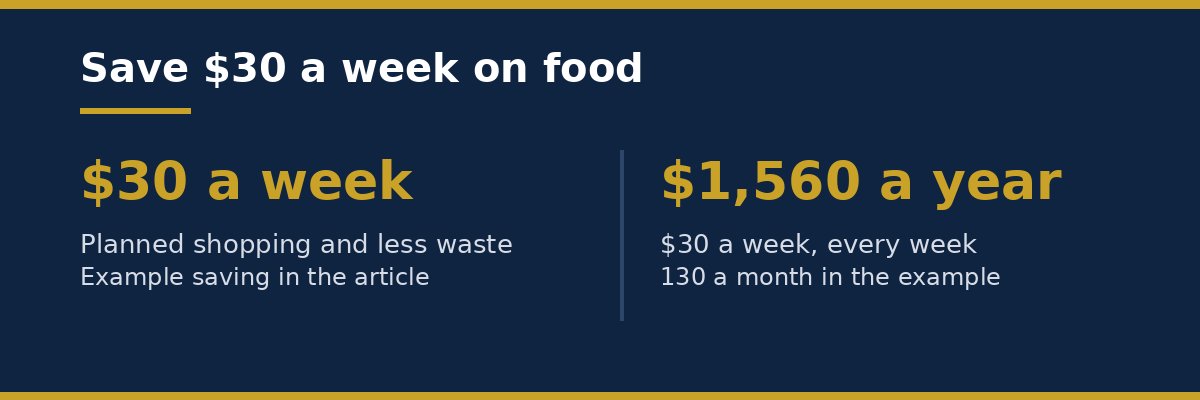
If your monthly food spending is 600, that is about 150 a week. A 20 percent saving on that amount is 30 a week, or about 1,560 a year. That is the size of the prize. You do not need a perfect plan to reach it. You need a plan you can repeat every week.
If you do not have a budget yet, start with How Do I Create a Monthly Budget That Actually Works? Put food in its own line so you can see it clearly. For a simple split of your income, read What Is the 50/30/20 Budget Rule, and Does It Work?
Plan Your Meals Before You Shop
Meal planning is the single step that saves the most money. When you plan, you buy food for meals you will actually cook. When you do not plan, you buy food that looks good in the shop and then guess at dinner time.
Pick Seven Dinners
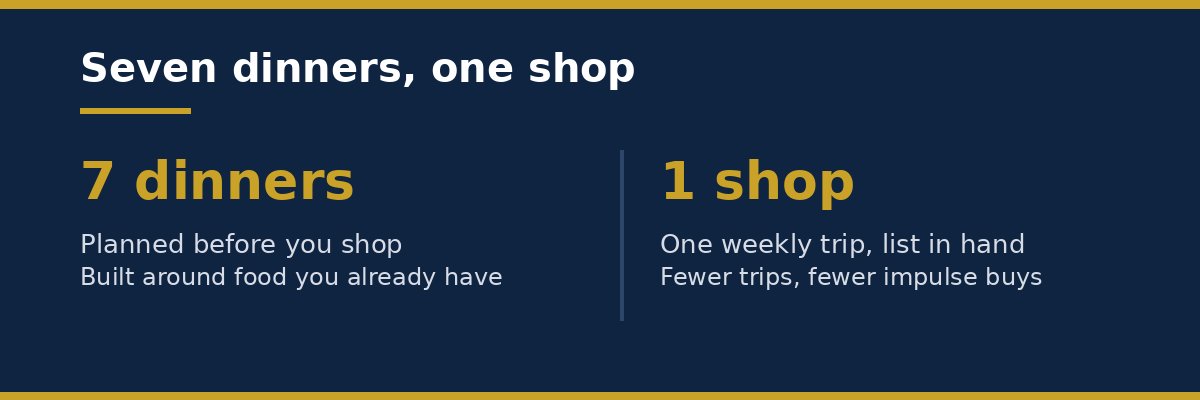
Sit down once a week and pick seven dinners. Keep them simple. Use meals you already know how to cook. Repeat favourites every week if that helps. A plan with five easy meals and two new ones is better than a plan with seven new recipes you will not cook.
Write the plan on paper or in your phone. Then check what you already have at home. Cross off anything already in your cupboard, fridge, or freezer. The shopping list is only the missing items.
Plan Around What You Already Have
Look in your cupboard first. Most homes have food that sits unused: pasta, rice, tinned beans, frozen vegetables, or sauces. Build at least two meals a week around those items. This step alone can cut one shop a month, because you use food you already paid for.
Keep a Short List of Cheap Meals
Keep a list of ten cheap meals your household likes. Examples are pasta with vegetables, rice and beans, soup with bread, eggs on toast, and a stir fry with frozen vegetables. When money is tight or the week is busy, cook from this list instead of ordering takeaway.
Shop With a List and Stick to It
A list is a promise to yourself. Write it from your meal plan, then buy only what is on it. Shops are designed to tempt you with displays at the end of each aisle and near the till. A list keeps you moving past them.
Shop Once a Week
One big weekly shop costs less than five small trips. Each extra trip adds impulse buys: a snack, a drink, or a treat that was not planned. If you shop once a week, you make those choices once, not five times. Keep a small top-up list for fresh items like milk and bread if you need it, and buy only those items on the top-up trip.
Do Not Shop When You Are Hungry
Hunger changes what you buy. You buy more, and you buy food you want right now rather than food you planned to cook. Eat before you shop, or shop online where the list does all the choosing. Online shopping also shows the running total, which helps you stay inside your budget.
Compare Prices by Unit, Not by Pack
The cheapest pack is not always the cheapest food. Look at the price per 100 grams or per litre, which most shops print on the shelf label. A large bag of rice often costs less per 100 grams than a small bag. A big pack of meat may cost more in total but less per meal if you freeze half of it. Compare the unit price and buy the better value when you have space to store it.
Try the Shop Brand
Shop brand basics often cost much less than the big name brand for the same food. Try the shop brand for pasta, rice, tinned tomatoes, oats, and cleaning products first. If your family cannot tell the difference, keep the saving. If they can, switch back only for that one item and keep the rest.
A Worked Example: Saving 30 a Week
Here is a simple example with real math. A household spends 150 a week on food, or 600 a month.
| Change | Saving per week |
|---|---|
| One planned shop instead of three extra trips | 12 |
| Two meals built from food already at home | 8 |
| Shop brand basics instead of big brands | 6 |
| Less food thrown away | 4 |
| Total | 30 |
That is 30 a week, 130 a month, and 1,560 a year. The numbers are an example, not a promise. Your saving depends on your current spending and on how many of the steps you follow. Even half of it, 15 a week, is 780 a year.
If you want a wider plan for cutting food costs, read How Do I Cut Food Spending Without Cutting Meals?
Cut Waste Before It Costs You
Food waste is money in the bin. The United States Department of Agriculture notes that food loss and waste happen at home as well as in shops and restaurants, and the largest share of household waste is food that goes bad before it is used. You can find their guidance at https://www.usda.gov/
Store Food So It Lasts
Put new food behind old food in the fridge so you use the oldest first. Freeze bread, meat, and leftovers on the day you buy or cook them, not on the day they are about to go bad. Label frozen food with the date. Use clear boxes so you can see what is inside without opening every lid.
Use Leftovers on Purpose
Cook extra rice, pasta, or roast vegetables and use them the next day. Leftover chicken can become a sandwich or a soup. Leftover rice can become fried rice. Plan one leftover night each week and put it on the meal plan, so it feels like a plan and not a failure.
Check Dates the Right Way
A use-by date is about safety, and you should follow it. A best-before date is about quality, and food is often still fine after it. Smell and look at the food, and when in doubt, throw it out. The point is to buy less of the food that keeps going bad, not to take risks with safety.
Buy Seasonal and Frozen Food
Fresh food in season costs less and tastes better. Out of season fruit and vegetables travel further and cost more. Learn which foods are in season where you live and build meals around them.
Frozen vegetables and fruit are often as good as fresh for cooking, and they cost less per meal because none of it goes bad. Frozen peas, spinach, berries, and mixed vegetables are useful in soups, curries, pasta, and smoothies. Keep a few bags in the freezer so you always have vegetables for a meal.
Keep Takeaway as a Treat, Not a Habit
Takeaway food costs far more per meal than cooking the same food at home. A takeaway meal for a family can cost as much as two or three home-cooked dinners. That does not mean you must never order takeaway. It means you should plan it.
Put takeaway in your budget as a fixed amount, for example one meal a week or twice a month. When the amount is used up, cook at home. This keeps the treat enjoyable and stops it from quietly eating your food budget.
If you track spending by hand, read How Do I Track Spending Without a Spreadsheet? If you want a weekly rhythm instead of a monthly one, read How Do I Set a Weekly Budget Instead of a Monthly One?
Review Your Food Budget Every Month
A food budget works best when you review it. At the end of each month, look at what you spent and what you saved. Ask three questions. Did we follow the meal plan? Did we throw food away? Did takeaway stay inside its limit? Fix the weakest answer next month.
If the budget keeps failing, the amount may be too low, not your effort. A budget that is too tight gets ignored. Raise the food amount a little and cut somewhere else, or find one more saving from the steps above. For a monthly review routine, read How Do I Review My Budget at the End of the Month?
FAQ
How much should I spend on groceries each month?
There is no single right amount. It depends on household size, where you live, and what you cook. A useful start is to track one month of real spending, then set your budget 10 to 20 percent below that and use the steps in this guide to reach it.
Is it cheaper to shop online or in the shop?
Online shopping can be cheaper because you see the running total and avoid impulse buys, but delivery fees add cost. Compare one online shop with one in-store shop for the same list and keep the cheaper option. Pick up your online order yourself if that removes the delivery fee.
Are meal kits a good way to save money?
Meal kits save planning time, but they usually cost more per meal than buying the same food yourself. They can help a beginner learn to cook, but they are not the cheapest way to feed a household every week.
How do I save money on groceries for one person?
Cook in batches and freeze half. Buy smaller packs of fresh food so less goes bad. Use the same ingredient in two meals, for example chicken in a stir fry on Monday and in a sandwich on Tuesday. A single person wastes more food per person, so planning matters even more.
What is the fastest way to cut my grocery bill this week?
Plan seven dinners, shop once with a list, use two meals from food you already have, and skip one takeaway. Those four steps can save money in the very first week without changing what your family eats.
Conclusion
Saving money on groceries is not about buying less food or eating worse meals. It is about planning what you cook, shopping once with a list, comparing prices, and using the food you already have. Start with one week: seven dinners on paper, one shop, and a list you stick to. Check what you saved, then repeat it next week. Small savings of 30 a week become 1,560 a year, and that money can go to your emergency fund, your debt, or your next goal.
This article is for general information and education only. It is not legal or financial advice.
