
How do I create a monthly budget that actually works?
A monthly budget that actually works is simple, realistic, and reviewed once a month. You list what comes in, you list what goes out, you give every dollar a job before the month starts, and you leave room for real life. If your budget only works on paper, it is too strict, too detailed, or based on a guess instead of your real spending.
Start with your real income after tax, not your salary before tax. Then list your fixed costs, your variable costs, and your savings goal. Then check the total. If spending is higher than income, you cut wants first, not rent, food, or minimum debt payments. If income is higher than spending, you send the extra to savings or debt on purpose, before you can spend it by accident.
This post shows the exact steps, a worked example, and how to fix a budget that keeps failing. It is educational only. It is not financial advice, and it does not replace advice from a qualified professional for your own situation.
Why most budgets fail
Most budgets fail for the same few reasons. First, they are based on what you wish you spent, not what you actually spent. Second, they have too many categories, so tracking becomes a chore. Third, they leave no room for irregular costs, like a car repair, a gift, or a medical bill. Fourth, they are all or nothing, so one bad week feels like total failure, and the budget is abandoned.
A good budget fixes all four problems. It starts with real numbers from your bank and card statements. It uses a small number of categories. It includes a small buffer for irregular costs. And it is reviewed, not judged. A budget that needs a small fix is a normal budget, not a failed budget.
Step 1: Find your real monthly income
Write down the money you actually receive in a normal month, after tax and after any automatic deductions. If you are paid weekly, add your four weekly payments, or use your average monthly pay from the last three months. If your income changes each month, use the lowest normal month as your base, and treat extra income as a bonus, not as part of your regular plan.
Do not count money you hope to earn, a bonus you have not received, or a tax refund you have not got yet. A budget built on hoped for income will break in the first week.
Example: If you take home 2,800 in a normal month, your budget starts at 2,800, even if your gross salary is higher.
Step 2: List your fixed costs first
Fixed costs are costs that stay about the same each month. Common examples are rent or mortgage, utilities, phone, internet, insurance, subscriptions, and minimum debt payments. Write each one down with its real amount. Check your statements, do not guess.
Fixed costs are the hardest to change quickly, so they set the limit for the rest of your budget. If fixed costs take more than about 70 percent of your income, your budget will feel tight, and the fix is usually a bigger change over time, like renegotiating a bill, changing a plan, or increasing income, not cutting coffee for one week.
Step 3: List your variable costs, honestly
Variable costs change each month. Common examples are food, transport, fuel, clothing, household items, personal care, entertainment, and eating out. Look at the last two or three months of statements and take an average. This step is uncomfortable for many people, and that is exactly why it matters.
Do not write a fantasy number for food or transport. Write the average you actually spent. You can reduce it later, in small steps, but the first budget must be honest, or you will not trust it.
Step 4: Use a simple split, then adjust it
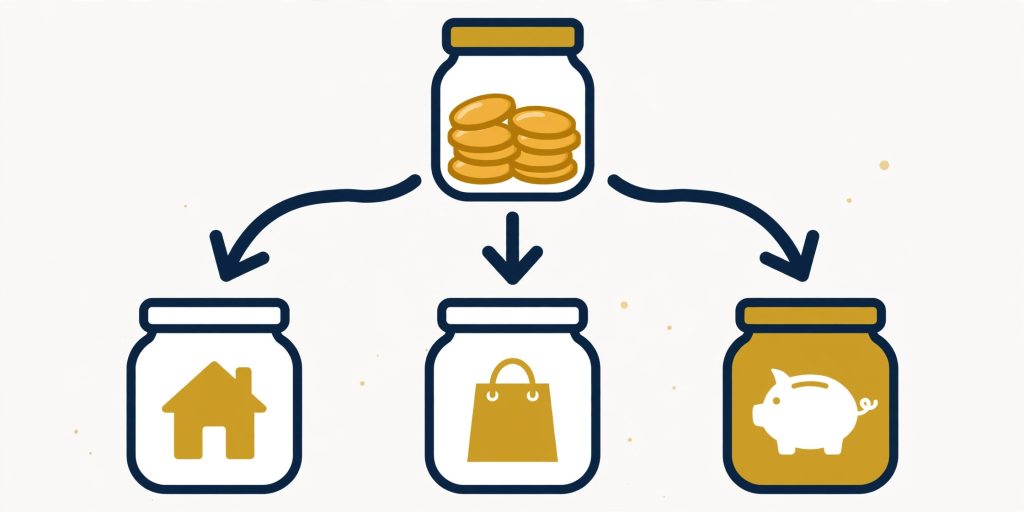
A simple starting split is 50 percent for needs, 30 percent for wants, and 20 percent for savings and extra debt payments. Needs are rent, utilities, food, transport to work, insurance, and minimum debt payments. Wants are eating out, streaming, hobbies, and non essential shopping. Savings and extra debt payments are emergency fund, future goals, and payments above the minimum.
This split is a guide, not a rule. If your rent is high, your needs may be more than 50 percent, and that is common. If you are paying off high interest debt, your savings and debt share may be higher for a while. The point is to see the split, then adjust it to your real life, in small steps.
Worked example, with a monthly take home income of 3,000:
- Needs, 50 percent: 1,500. This could be rent 900, utilities 150, food 300, transport 150.
- Wants, 30 percent: 900. This could be eating out 200, streaming and hobbies 150, clothing and personal 250, other wants 300.
- Savings and extra debt, 20 percent: 600. This could be emergency fund 300 and extra debt payment 300.
- Total: 1,500 plus 900 plus 600 equals 3,000.
Check your own numbers the same way. Add needs, wants, and savings. The total must equal your income. If the total is higher than your income, you need to cut wants first. If the total is lower, send the leftover to savings on purpose.
Step 5: Make it easy to follow, and review it once a month
A budget you do not follow is not a budget, it is a document. Make tracking simple. Use one method only, for example a notes app, a simple spreadsheet, or your banking app. Check spending once a week for five minutes, not every hour. Pay yourself first if you can, by moving savings to a separate account on payday, before you spend it.
At the end of the month, do a short review. Ask three questions. What was higher than planned, and why? What was lower than planned, and why? What will I change next month, in one small step? Do not rewrite the whole budget each month. Change one category, test it, and keep what works.
How to fix a budget that keeps failing
If you overspend in one category, do not quit. Move money from another wants category, or reduce that category next month by a small amount. For example, if food was 50 over plan, reduce eating out by 50 next month, or increase the food budget by 25 and reduce wants by 25. The goal is balance, not perfection.
If your income is irregular, use a base month budget. Pay fixed costs and food first from the lowest normal month. When you earn more in a good month, send the extra to a buffer account first, then to savings or debt. This smooths out bad months without a new budget each time.
If you keep forgetting irregular costs, add a small monthly buffer. For example, set aside a fixed amount each month for car, home, gifts, and medical costs, even in months when you do not spend it. When a cost arrives, you use the buffer, not a credit card.
A simple starter budget template
Use these categories only, to start. You can add detail later, only if you still track it after one month.
- Income after tax
- Rent or mortgage
- Utilities
- Phone and internet
- Insurance
- Minimum debt payments
- Food
- Transport and fuel
- Personal and household
- Entertainment and wants
- Emergency fund
- Extra debt payment or future goal
- Irregular costs buffer
If a category is empty for you, delete it. If you need two food categories, food at home and food out, use two, but do not create twenty categories on day one.
Common mistakes to avoid
Do not set a savings goal you cannot keep for three months in a row. A smaller goal you keep is better than a large goal you quit. Do not cut all fun spending at once. A budget with no room for enjoyment is a budget you will break. Do not compare your budget to someone else’s budget. Rent, income, family size, and debt are different, so the numbers will be different.
Do not use credit to cover a regular budget gap. If spending is higher than income every month, the gap is a math problem, not a willpower problem. The fix is to reduce spending, increase income, or both, over time. If debt is already hard to manage, seek help early from a qualified adviser or a reputable debt support service, rather than waiting until it grows.
Frequently asked questions
How long does it take to create a monthly budget?
For most beginners, 30 to 60 minutes for the first budget, using real statements. After that, a weekly check takes about five minutes, and a monthly review takes about 15 minutes.
Should I use the 50/30/20 rule?
It is a good starting guide, not a strict rule. Use it to see your split, then adjust it to your rent, income, and debt. If your needs are higher than 50 percent, that is common, and you adjust wants and savings to fit, rather than forcing a number that does not fit.
What if I have no money left for savings?
Start very small, even a small fixed amount on payday, if you can do so without missing a minimum payment or an essential bill. Then look for one wants cut, one bill to renegotiate, or one small income step. Savings grows from consistency, not from a single large amount.
Do I need a budgeting app?
No. An app can help, but it is not required. A simple spreadsheet, a notes app, or your banking app is enough to start. Choose the method you will actually use for three months, not the method with the most features.
What if my partner or family does not follow the budget?
Agree on the big numbers first, like total spending, savings, and debt payments, before arguing about small categories. Give each person a small personal amount they can spend without asking. A budget works better when it feels fair, not like a punishment.
How often should I update my budget?
Update it once a month, after a short review. Do not update it every day. Small daily changes make it hard to see the pattern, and they make tracking feel like a job.
Conclusion, and your first step today
A monthly budget that actually works is not perfect. It is honest, simple, and reviewed. Start today with one step. Look at your last month of statements, write your real income after tax, and list your fixed costs. That is enough for day one. Tomorrow, add variable costs and your simple split. At the end of the month, review once, change one thing, and repeat.
Your next steps in this series are: how to build an emergency fund from zero, should you pay off debt or invest first, and how compound interest works. Those posts will link here in the Budgeting cluster once they are published.
Disclaimer: This article is for education only. It is not financial advice, and it does not guarantee any result. Your income, costs, debts, and goals are personal, and you should consider your own situation, and speak to a qualified professional if you need personal advice, before making a financial decision.
Pingback: GM to Pay $220 Million Over Driver Data Sold to Insurers - Invest Clarity Path