

How Do I Stop Impulse Buying?
You can stop impulse buying by slowing the decision down, giving every unplanned purchase a clear test, and removing the easiest ways to buy without thinking. You do not need more willpower. You need a simple system you can use in the shop, on your phone, and at home, before the money leaves your account.
Impulse buying is a purchase you did not plan, did not budget for, and did not really need at that moment. It often feels small at the time. A coffee here, a sale item there, a late night order when you are tired. The problem is not one purchase. The problem is how often those small purchases repeat, and how quietly they add up over a month.
This guide explains why impulse buying happens, how to spot your own triggers, and how to build a plan that fits real life. The steps are simple, and you can start with one step today.
Why Impulse Buying Happens
Impulse buying is normal. Shops, apps, and adverts are designed to make buying feel fast and easy. When you understand the pressure behind the urge, it is easier to pause and choose.
Your Brain Loves a Quick Reward
A new item can feel exciting for a short time. That excitement can be stronger than the thought of a bill due next week. This is one reason a purchase can feel good in the moment and less good later, when you check your balance.
Sales, Scarcity, and Urgency Push You to Act Now
Phrases such as limited time only, only two left, and sale ends tonight are meant to create urgency. They push you to decide before you have time to think. A real saving is still a cost if you did not need the item and did not plan for it.
Tiredness, Stress, and Boredom Make It Harder to Pause
Many impulse buys happen when you are tired, stressed, bored, or hungry. At those times, thinking clearly takes more effort. Shopping can feel like a quick way to feel better, even when the feeling does not last.
One-Click Buying Removes the Pause
Saved cards, one-click checkout, and buy now pay later options remove the small steps that used to give you time to think. When buying takes two seconds, there is almost no space between the urge and the payment.
How to Spot an Impulse Buy Before You Pay
A simple test can help you tell the difference between a planned purchase and an impulse buy. Use it every time you feel a sudden urge to buy.
Ask these five questions:
- Did I plan to buy this today?
- Is there money for it in my budget?
- Do I need it this week, or can it wait?
- Do I already own something that does the same job?
- Will I still be glad I bought it in 30 days?
If you answer no to most of these questions, it is probably an impulse buy. That does not mean you can never buy it. It means you should wait and decide with a clear head.
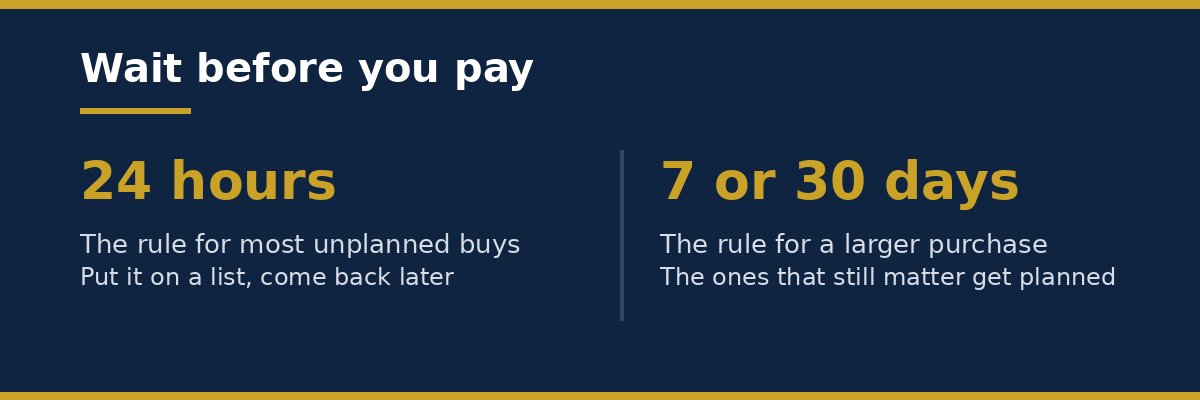
A short pause is the most useful tool in this guide. A 24 hour rule works well for most unplanned purchases. For a larger purchase, try a 7 day rule or a 30 day rule. Put the item on a list, write down the price, and come back to it after the waiting time. Many items lose their appeal after a day. The ones that still matter after a week are easier to plan for.
Build a Simple System That Makes Impulse Buying Harder
Willpower helps, but a system helps more. A system works even on a tired day, because the decision is already made. Use the steps below to build your own system.
Step 1: Give Impulse Spending a Small, Honest Limit
A budget that allows no fun spending at all is hard to keep. Many people give up on it, then spend without any limit. A better plan is to set a small amount for unplanned spending, and keep it separate from money for rent, food, bills, and transport.
For example, you could set aside 20 dollars a week for treats and unplanned buys. When that money is gone, you wait until next week. This keeps small pleasures in your life, while stopping them from taking over your whole budget. If you do not have a budget yet, learn how to create a monthly budget first, then add this limit inside it.
Step 2: Use the 24 Hour Rule for Every Unplanned Buy
The 24 hour rule is simple. If you did not plan to buy it, wait 24 hours before you pay for it.
Put the item in your online basket and close the app. Take a photo of it in a shop and walk away. Write it on a wish list with the price and the date. If you still want it after 24 hours, and the money is in your budget, you can buy it without guilt.
Step 3: Remove the Easiest Ways to Buy
Look at where your impulse buys usually happen, and make those places a little harder to reach.
Try these changes:
- Remove saved card details from shopping apps and websites.
- Turn off one-click checkout where you can.
- Unsubscribe from sale emails and marketing texts.
- Delete shopping apps from your phone, and use the website only when you need to buy something planned.
- Leave your card at home when you go out for a walk or a quick errand, if it is safe to do so.
- Avoid browsing shops and sale pages when you are bored or tired.
Step 4: Shop With a List, and Stick to It
A list is a simple promise to yourself. Before you shop, write down what you need. In the shop, buy only what is on the list. If you see something else, add it to your wish list for the 24 hour rule instead of putting it in your basket.
For food shopping, a list can help in two ways. It stops extra items from creeping in, and it helps you plan meals so less food is wasted. If food spending is a weak spot for you, read how to cut food spending without cutting meals for practical ideas that keep meals filling and enjoyable.
Step 5: Plan for Your Weak Moments
If you know when impulse buying usually happens, you can plan for that time in advance.
For example, if you often order food late at night when you are tired, keep a simple meal ready at home, or set a rule that food delivery is only for one planned night each week. If you often buy clothes after a stressful day at work, change your route home, call a friend, or go for a walk first.
Step 6: Make Saving Visible and Easy
Impulse buying is easier when saving feels far away and unclear. When you can see your saving grow, even by a small amount, waiting becomes more rewarding.
Try this. Each time you decide not to buy something on impulse, move that amount into a separate savings pot, or write it down in a notebook. At the end of the month, add up what you did not spend. Seeing that total can be a strong reason to keep going.
Step 7: Check Your Spending Every Week
A weekly check takes only a few minutes, and it stops small slips from turning into a big surprise at the end of the month.
Once a week, look at your bank or card statement and ask:
- How much did I spend on things I did not plan?
- Where did those purchases happen?
- What was my mood or the time of day?
- What would I change next week?
If you do not use a spreadsheet, you can still track spending in a simple way. A notebook, a notes app, or a weekly photo of your receipts can work well. See how to track spending without a spreadsheet for simple methods that take only a few minutes a day.
A Worked Example: What Small Impulse Buys Really Cost
Small amounts are easy to dismiss. A worked example makes the total clear.
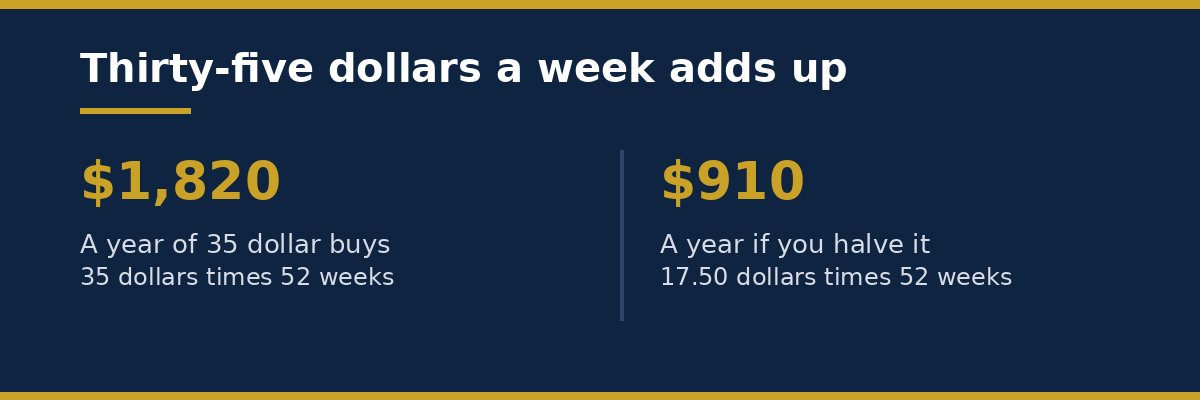
Imagine Sam spends 35 dollars a week on unplanned purchases. This includes snacks, sale items, app purchases, and late night orders. Sam does not track these buys, because each one feels small.
Here is the math, step by step:
- Weekly impulse spending: 35 dollars
- Weeks in a year: 52
- Yearly total: 35 x 52 = 1,820 dollars
That is 1,820 dollars a year on purchases Sam did not plan.
Now imagine Sam uses the 24 hour rule and a weekly impulse limit, and cuts that spending in half.
- New weekly impulse spending: 35 / 2 = 17.50 dollars
- New yearly total: 17.50 x 52 = 910 dollars
- Yearly saving: 1,820 – 910 = 910 dollars
Sam still spends 17.50 dollars a week on treats and unplanned buys. Nothing is banned. Yet Sam keeps 910 dollars a year that would otherwise have disappeared in small, forgotten purchases.
For a simple way to divide your money between needs, wants, and saving, the 50/30/20 rule can help. Read what the 50/30/20 budget rule is and see how impulse spending fits inside the wants part of your budget, not inside money for needs.
What to Do After an Impulse Buy
Everyone slips sometimes. One impulse buy does not mean your plan has failed. What matters is what you do next.
First, do not hide the purchase from yourself. Write it down, add it to your weekly check, and move on. Second, ask what triggered it, so you can plan for that trigger next time. Third, check if you can return the item if you do not need it and it is still unused. Many shops allow returns within a set time, so check the return policy before you decide.
A helpful rule is to restart the next morning, not next month. A monthly budget can feel ruined by one bad week, but a weekly check lets you reset quickly and keep going.
When Impulse Buying Feels Out of Control
For most people, the steps in this guide are enough. But if impulse buying happens very often, causes debt you cannot manage, or leaves you feeling distressed, it may help to get extra support.
You can talk to a trusted person, a money adviser, or a support service in your country. The Consumer Financial Protection Bureau offers free, plain language budgeting tools and guides on its website at consumerfinance.gov. You can use those tools to build a budget, track spending, and plan for bills.
You do not need to fix everything at once. Start with one step, such as the 24 hour rule, and add the next step when the first one feels normal.
FAQ
How long does it take to stop impulse buying?
It takes time, and it is different for everyone. Many people notice a change within two to four weeks of using a pause rule and a weekly spending check. The habit becomes easier as the new steps feel normal.
Is it okay to buy something I want, not just something I need?
Yes. A budget is not meant to remove every want. It is meant to make room for wants you choose, while protecting money for needs and saving. Set a small limit for wants and unplanned buys, and enjoy spending inside that limit without guilt.
What is the best rule to stop impulse buying?
The 24 hour rule is a good starting point for most people. It is simple, it works for small and large purchases, and it gives you time to decide with a clear head. For larger purchases, use a longer wait, such as 7 days or 30 days.
How do I stop impulse buying online?
Remove saved cards, turn off one-click checkout, unsubscribe from sale emails, and delete shopping apps from your phone. Shop with a list, buy only the planned item, and close the site when you are done. Put unplanned items on a wish list and wait 24 hours before you decide.
What should I do if I keep breaking my budget?
First, check if the budget is realistic. A budget with no room for treats, or with amounts that are too low for food and transport, is hard to keep. Second, check your triggers and your weak moments, and plan for them. Third, try a weekly budget instead of a monthly one, so you can reset more often and learn faster.
Should I use cash to stop impulse buying?
Cash can help some people, because handing over notes feels more real than tapping a card. You could try taking out your weekly impulse limit in cash, and leaving your card at home for small trips. This method does not suit everyone, so try it for two weeks and see if it helps you.
Conclusion
Stopping impulse buying is not about never buying anything fun again. It is about slowing down, spotting the urge, and making a clear choice.
Start with one simple step today. Use the 24 hour rule for your next unplanned purchase. Set a small weekly limit for impulse spending. Remove one easy way to buy without thinking. Check your spending once a week, and learn from what you find.
Small changes, repeated every week, can add up to real money over a year. As the worked example shows, cutting 35 dollars of weekly impulse spending in half keeps 910 dollars a year. That is money you can use for a goal you choose, instead of purchases you barely remember.
Be patient with yourself. A slip is not a failure. It is a chance to learn what triggered the buy and to make your plan stronger next time.
This article is for general information and education only. It is not legal or financial advice.
