
How Do I Pay Off Debt Fast?
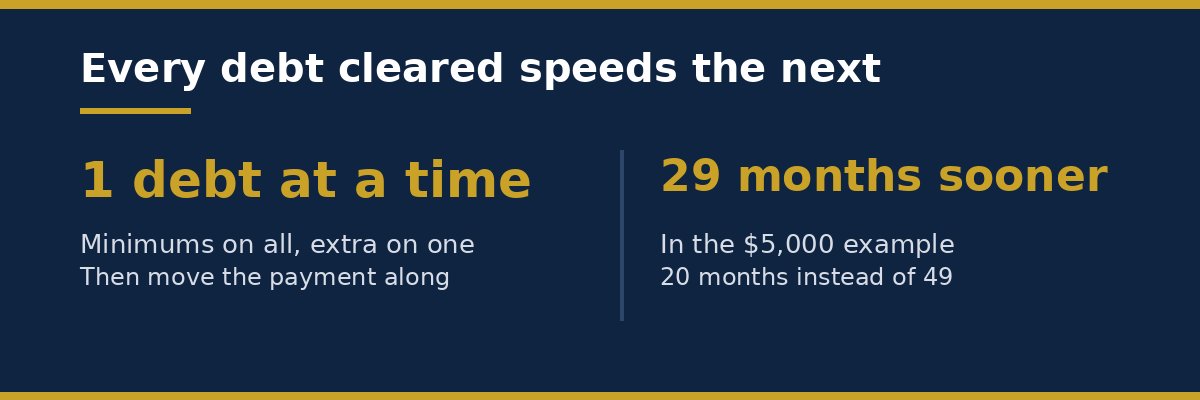
Yes, you can pay off debt fast, but fast means a clear plan and steady extra payments, not a magic trick. The simple method is to list every debt, choose one payoff order, pay the minimum on all of them, and throw every spare dollar at one debt until it is gone. Then move that payment to the next debt. Each debt you clear frees money for the next one, so the payoff speeds up as you go.
Paying debt fast is mostly about two things: paying more than the minimum, and not adding new debt while you work. This guide explains how to list your debts, how to pick an order, how to find extra money, and how much faster a bigger payment really is, with a worked example you can copy.
Step 1: List Every Debt You Owe
You cannot pay off debt fast if you do not know the full picture. Make a list of every debt: credit cards, personal loans, car loans, student loans, store cards, and any money owed to family or friends. For each one, write down four numbers: the balance, the interest rate, the minimum payment, and the due date.
Add up the total. The number may feel big, and that is normal. A clear total is better than a vague worry, because a clear total can be turned into a plan with a finish date. For a full planning routine, read How Do I Make a Debt Payoff Plan I Can Stick To?
Step 2: Pick a Payoff Order and Stick to It
There are two proven orders. Pick the one that fits you, then do not switch halfway.
The snowball method pays the smallest balance first. You clear one debt quickly, feel a win, and use that freed payment on the next debt. It works well if you need motivation to keep going. Read What Is the Debt Snowball Method? for the full steps.
The avalanche method pays the highest interest rate first. It saves the most money in interest, because the most expensive debt shrinks first. It works well if you are motivated by the math and can wait longer for the first win. Read What Is the Debt Avalanche Method, and When Is It Better? to compare them.
Either order works. The best order is the one you will actually follow. If you are not sure, start with the smallest balance, because an early win builds momentum.
Step 3: Pay More Than the Minimum
The minimum payment is designed to keep the debt alive for years. On a credit card, the minimum often covers little more than the monthly interest, so the balance barely falls. Paying extra, even a small amount, is what makes the payoff fast.
A Worked Example: 5,000 at 20 Percent Interest
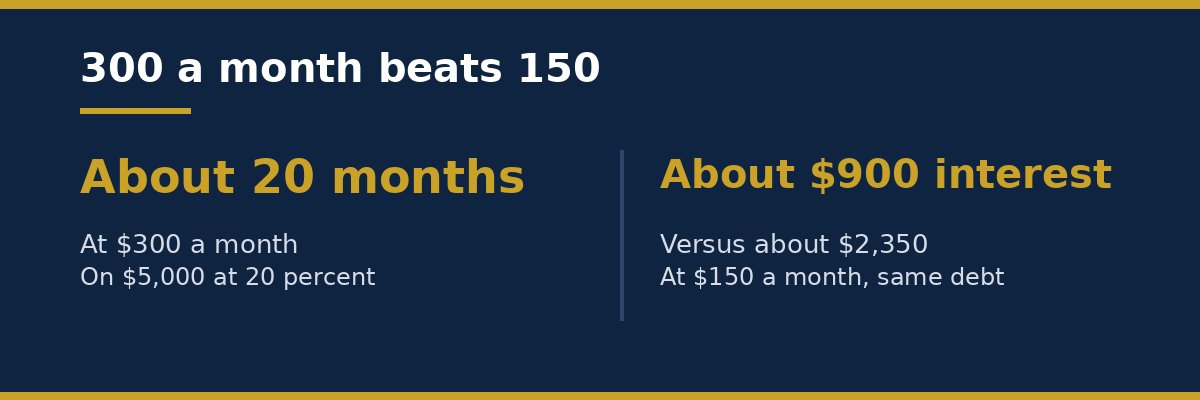
Here is a simple example with real math. The figures are approximate, because interest is charged daily and payments vary, but they show the size of the difference. A card balance of 5,000 dollars at 20 percent interest a year.
| Monthly payment | Months to pay off | Total interest paid |
|---|---|---|
| 150 | About 49 | About 2,350 |
| 300 | About 20 | About 900 |
Paying 300 a month instead of 150 clears the same debt about 29 months sooner and saves about 1,450 in interest. The extra 150 a month is the whole difference. That is why finding extra money matters more than finding a clever trick. If you only pay the minimum on a card, read What Happens If I Only Pay the Minimum on a Credit Card? to see how long it takes.
Step 4: Find Extra Money Every Month
Most people can find extra money for debt without a big lifestyle change. Look for it in three places.
First, cut one or two small costs for a few months. A subscription you do not use, one takeaway a week, or a daily snack can add 50 to 100 dollars a month. Second, use money that arrives unexpectedly: a tax refund, a work bonus, or cash from selling something you do not use. Send it straight to the debt you are targeting. Third, earn a little extra for a short time. A weekend of extra work or a few hours of freelance work can add a useful lump sum. The payoff plan is temporary, and the extra effort ends when the debt ends.
Do not use your emergency fund to pay debt, and do not stop paying into a retirement plan that your employer matches. A small emergency cushion protects you from new debt when a surprise bill arrives. Read Should I Use Savings to Pay Off Debt? before you move savings to debt.
Step 5: Stop Adding New Debt
Paying debt fast fails if new debt keeps arriving. While you work through the plan, pause new borrowing. Put the credit cards away and pay for daily spending with cash or a debit card. If a card is tempting, freeze it in a block of ice, leave it at home, or cut it up. You can keep the account open for your credit history, but stop using the card.
If you must use a card for an online purchase or a booking, pay it off in full before the statement date, so no interest is charged. The rule is simple: nothing new goes on a card until the old debt is gone.
Step 6: Talk to Your Lender If You Cannot Pay
If the minimum payments are more than you can afford, contact your lender before you miss a payment. Lenders can sometimes lower the interest rate for a time, set up a payment plan, or pause payments for a month or two. Asking costs nothing, and missing payments damages your credit and adds fees. Read How Do I Talk to a Lender If I Cannot Pay? for what to say.
Be careful with companies that promise to settle your debt for a fee. Some charge large fees and tell you to stop paying, which can lead to lawsuits and a damaged credit record. A non-profit credit counsellor is a safer first call. The Consumer Financial Protection Bureau has free guidance on debt at https://www.consumerfinance.gov/
Step 7: Track Progress and Celebrate Each Debt Gone
Write your total debt on a wall chart or a simple spreadsheet, and update it every month. Watching the total fall is the best motivation to keep going. When a debt reaches zero, celebrate in a small, free way, then move its whole payment to the next debt the same month. Do not let the freed money drift into spending.
If the payoff will take more than a year, break it into smaller goals. Aim to clear one card in three months, or to cut the total by 1,000 in two months. Small goals keep a long plan alive. Read How Long Will It Take to Pay Off My Debt? to set a realistic finish date.
Should You Consolidate or Refinance?
A consolidation loan or a balance transfer card can help if it truly lowers your interest rate and you do not add new debt. A balance transfer card with a low rate for a year can cut interest, but the rate jumps when the offer ends, and transfer fees apply. A consolidation loan can turn several payments into one, but only helps if the new rate is lower than the old ones.
These tools help people who already have a plan. They do not fix spending, and they can make things worse if you run the cards back up after moving the balance. Read Should I Consolidate My Debt? before you apply for anything.
FAQ
How fast can I realistically pay off debt?
It depends on the total, the interest rate, and how much extra you can pay. A 5,000 card balance at 20 percent takes about 20 months at 300 a month, and about 49 months at 150 a month. List your debts, pick an order, and work out your own finish date from your own numbers.
Should I pay off the smallest debt or the highest interest debt first?
Pay the smallest first if you need quick wins to stay motivated. Pay the highest interest first if you want to save the most money. Both work. The one you will stick to is the right one for you.
Is it better to pay off debt or save first?
Keep a small emergency cushion first, then attack the debt. Paying high interest debt usually saves more than savings earns. Read Should I Pay Off Debt or Invest First? for the full comparison.
Can I pay off a car loan early too?
Yes. Extra payments toward the principal can shorten a car loan and cut interest, if your lender applies them that way. Read How Do I Pay Off a Car Loan Early? for the steps and the fee to check first.
What if I can only afford the minimum payments?
Pay the minimums on everything and stay current, then look for even 25 extra dollars a month for the first debt on your list. If even the minimums are too much, contact your lenders and a non-profit credit counsellor before you miss a payment.
Conclusion
Paying off debt fast comes down to seven steps: list every debt, pick one payoff order, pay more than the minimum, find extra money each month, stop adding new debt, talk to your lender if you struggle, and track the total until it reaches zero. There is no shortcut, but there is a clear path. Start today with the list, pick your first target debt, and send it the first extra payment. Each debt you clear makes the next one faster.
This article is for general information and education only. It is not legal or financial advice.
