
Best Savings Account for College Students: No-Fee, Low-Minimum Options
The best savings account for college students is one with no monthly fee, a low or zero minimum balance, free access to ATMs near campus, and simple mobile banking. You do not need the account with the highest advertised rate. You need the account that costs you nothing to keep open while your balance is small, and that lets you move money in and out without a fee.
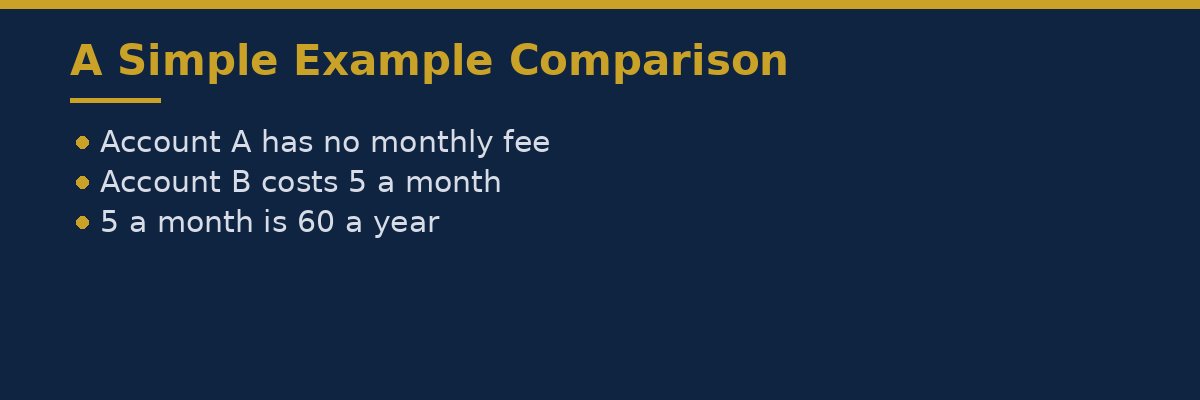
Most students start with a small balance, add money in uneven amounts, and need cash or a transfer at short notice. That makes fees and minimums more important than a small difference in interest. A monthly fee of 5 dollars may sound small, but it is 60 dollars a year, and that is real money on a student budget.
What Makes a Savings Account Good for a Student
A good student savings account fits a student budget. That means four things.
First, no monthly maintenance fee, or a fee you can avoid without effort. Many accounts charge a fee only if your balance drops below a set amount, or only if you do not receive a direct deposit. A student account should have no fee at all.
Second, a low opening deposit and a low minimum balance. Some accounts ask for 25 dollars to open, some ask for 100 dollars, and some ask for nothing. If you only have 50 dollars to start, an account that needs 100 dollars to open is not an option for you.
Third, easy access to your money. That means free ATMs near campus and fast transfers to your checking account. A savings account is not for daily spending, but you should be able to reach your money quickly when you need it.
Fourth, clear and simple mobile banking. You should be able to check your balance, move money, and turn on alerts from your phone. If the app is confusing, you will check your account less often, and that is when small fees go unnoticed.
Fees to Compare Before You Open an Account
A monthly maintenance fee is charged every month just for having the account. The best savings account for college students has no monthly fee at all. If an account does charge one, check how to avoid it. Common conditions are keeping a minimum balance or receiving a regular direct deposit. If you cannot meet the condition every month, treat the fee as a real cost.
A minimum balance fee is charged when your balance falls below a set amount, such as 300 dollars or 500 dollars. This is a common trap for students, because a student balance often drops after paying for books, rent, or a term bill. If your balance will often sit below the minimum, pick an account with no minimum balance fee.
ATM fees come in two parts. Does the bank charge you to use its own ATMs, and does it charge you to use another bank’s ATM? A good student account offers a wide network of free ATMs near your campus. If you take out cash twice a month and each withdrawal costs 3 dollars at another bank’s ATM, that is 72 dollars a year.
Also check fees for moving money out, for excess withdrawals, and for linking the account to cover a checking overdraft. Many banks still have withdrawal limits or fees, so check the rules first. Look too for small fees for a paper statement, a replacement card, or a wire transfer. None of these is large on its own, but they add up.
Minimums: Opening Deposit and Minimum Balance
Minimums decide whether you can open the account at all, and whether you can keep it open without a fee.
The opening deposit is the amount you need to put in on day one. Some accounts open with no deposit at all, some need 25 dollars, and some need 100 dollars or more. Pick one you can fund on the day you open it, without borrowing from your rent money.
The minimum balance is the amount you need to keep in the account to avoid a fee. The best student accounts have no minimum balance, or a very low one, such as 1 dollar. Be careful with accounts that waive the monthly fee only while your balance stays above a set figure. If your balance drops below that figure during the term, the fee starts, and it can take months to notice.
ATM Access and Branches Near Campus
Easy access to cash still matters, even if you pay for most things by card. Check where the bank’s free ATMs are before you open the account. Look for ATMs on campus, near your housing, and near the shops you use most. If the nearest free ATM is a long walk away, you will either pay out of network fees or carry more cash than you need.
Branches matter less than they used to, because most student banking happens on a phone. But a branch near campus is still useful if you need to deposit cash or replace a lost card. If you study abroad for a term, check the fees for using your card and ATMs away from campus, because foreign ATM fees can be high.
Mobile Banking, Alerts, and Savings Tools
A good mobile app is not a luxury for a student. It is how you manage your money. Look for a clear balance and transaction list, and easy transfers between your savings and checking accounts, so you can move money in seconds when you need it.
Turn on alerts you can set yourself, such as a low balance alert and a deposit alert. Alerts catch problems early, before a small mistake becomes a fee.
Look for savings tools, such as automatic transfers and savings goals. An automatic transfer moves a set amount from checking to savings on a set day, for example every payday. A savings goal lets you name a target, such as a textbook fund or a trip home, and watch your progress. These tools are the difference between saving sometimes and saving every month.
Student Perks: What to Look For, and What to Ignore
Some accounts come with student perks, such as a small cash bonus for opening the account or a discount on a streaming service. Perks can be nice, but they should never decide the account for you. A 50 dollar bonus is gone in ten months if the account charges a 5 dollar monthly fee.
Look for perks that help you save, not perks that help you spend. A useful perk is a savings goal tool or a round up feature that moves spare change into savings. A perk that pushes you to spend more is not helping your savings.
A Worked Example: Comparing Three Example Accounts
Here is a worked example, using three made up accounts with round numbers that are stated clearly and labelled as examples. These are not real accounts from any bank, and the figures are not real rates or terms. They show how to compare accounts side by side.
Account A, example: no monthly fee, no minimum balance, no fee at in network ATMs, and 3 dollars per withdrawal at other ATMs. Account B, example: 5 dollars a month unless the balance stays above 500 dollars, 25 dollars to open, and free in network ATMs. Account C, example: no monthly fee, 25 dollars to open, and no ATM fee at any ATM, but a 10 dollar fee for a paper statement each month.
First, work out the yearly cost of each account. Account A costs 0 dollars a year in monthly fees, because 0 times 12 equals 0. Account B costs 5 dollars a month, which is 60 dollars a year, because 5 times 12 equals 60, unless the balance stays above 500 dollars every month. Account C costs 0 dollars a year in monthly fees, but 10 dollars a month for a paper statement, which is 120 dollars a year, because 10 times 12 equals 120, unless the statement is switched to electronic delivery.
Next, add ATM costs. Imagine you withdraw cash twice a month at other ATMs with Account A. That costs 6 dollars a month, which is 72 dollars a year, because 3 times 2 equals 6, and 6 times 12 equals 72. With Account B and Account C, using in network ATMs costs 0 dollars.
Now put the numbers together for a student who uses in network ATMs and electronic statements. Account A costs 0 dollars a year. Account B costs 60 dollars a year if the balance falls below 500 dollars, and 0 dollars if it stays above. Account C costs 0 dollars a year with electronic statements.
The lesson is clear. The headline rate matters less than the fees. Account B may look good, but a balance that drops below 500 dollars costs 60 dollars a year. Account A is the simplest choice in this example, because it costs nothing in a normal month.
Now add saving to the picture. Imagine you save 50 dollars a month. That is 600 dollars a year, because 50 times 12 equals 600. A 60 dollar yearly fee takes 10 percent of that saving, because 60 divided by 600 equals 0.10, or 10 percent. That is the real cost of a fee on a small balance.
How to Open a Savings Account as a Student
First, compare two or three accounts using the table above, and pick the one with the lowest yearly cost for your habits. Do not open the first account you see.
Second, gather what you need. Most banks ask for a photo ID, such as a driving licence or passport, your date of birth, your address, and a way to contact you. If you are an international student, the bank may ask for extra documents. Some banks also ask for proof of student status, such as a student ID or an enrolment letter.
Third, open the account and fund it by transfer, by depositing cash in a branch, or by setting up a direct deposit. Put in the opening deposit, and check that the account shows no fee on the first statement.
Fourth, set up the tools. Turn on electronic statements, set up a low balance alert, link the account to your checking account, and set up an automatic transfer, even a small one, such as 25 dollars a month. Then check the first two statements for any fee you did not expect. If the fee is part of the account terms and you cannot avoid it, switch to a cheaper account while your balance is still small.
For a general guide to picking your first account, read our guide to how to choose a bank account as a beginner. To understand how a savings account differs from the account you spend from, read the difference between a checking and a savings account.
Mistakes to Avoid
The first mistake is picking an account for its bonus, not its fees. A one off bonus is worth less than a year of monthly fees. Compare the yearly cost first, and treat a bonus as a small extra.
The second mistake is ignoring the minimum balance. An account with a 500 dollar minimum is not free if your balance is usually 200 dollars. Always test the account against your worst month.
The third mistake is using your savings account for daily spending. A savings account is for money you want to keep, not money you spend each day. Use your checking account for spending, and move money to savings on purpose.
The fourth mistake is never checking your statements. Fees often start quietly, and a monthly fee can run for months before anyone notices. A two minute check each month is enough to catch it.
The fifth mistake is keeping all your money in one place with no goal. A savings account works best when you know what you are saving for, even if the goal is small, such as a textbook fund or a trip home. Our guide to how to save for a goal and an emergency fund at the same time shows a simple way to split your saving between two goals.
Frequently Asked Questions
What is the best savings account for college students?
The best one is a no-fee account with a low or zero minimum balance, free ATMs near campus, and simple mobile banking. Compare the yearly cost of each account for your habits, not just the advertised rate.
Do I need a high interest rate as a student?
Not really. With a small balance, a small difference in rate adds only a few dollars a year, while a monthly fee can cost 60 dollars a year. Fees and minimums matter far more than the rate when your balance is small. If you want to understand the rate itself, read our guide to what APY is, and why it is different from an interest rate.
Can I open a savings account with no money?
Some accounts open with no deposit, and some need a small amount, such as 25 dollars. Check the opening deposit before you apply. If you cannot fund the account on day one, pick an account with a lower opening deposit.
Should I open a savings account at the same bank as my checking account?
It is often easier, because transfers between the two accounts are fast and free. But do not stay with a costly account just for convenience. If another bank offers a no-fee account with free ATMs near campus, the saving is worth a second app on your phone.
Is my money safe in a savings account?
In the United States, deposits at an insured bank are protected up to the legal limit by federal deposit insurance. The Federal Deposit Insurance Corporation explains how that protection works at fdic.gov. For general help on choosing and using a bank account, the Consumer Financial Protection Bureau has guides at consumerfinance.gov.
Conclusion
The best savings account for college students is not the one with the flashiest bonus or the highest advertised rate. It is the one with no monthly fee, a low or zero minimum balance, free ATMs near campus, and simple mobile banking. On a student budget, fees matter more than a small difference in interest, because a 5 dollar monthly fee takes 60 dollars a year from a small balance.
Compare two or three accounts using the yearly cost, not the headline. Test each one against your worst month, not your best. Open the cheapest account for how you actually use it, set up electronic statements and a low balance alert, and start a small automatic transfer, even 25 dollars a month.
This article is for general information and education only. It is not legal or financial advice.
