Ghana Inflation Rises to 5.5% in October as Transport and Services Costs Climb
Direct answer
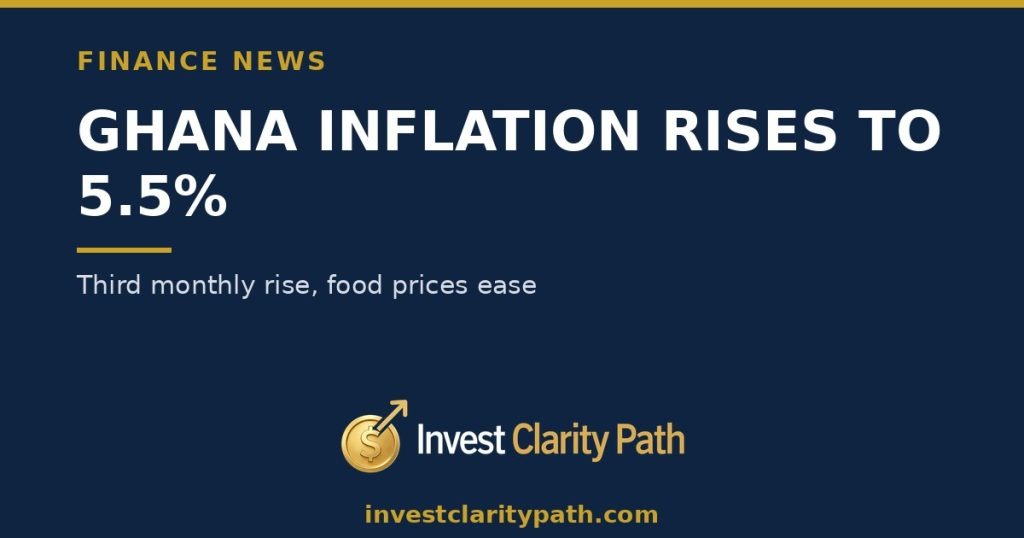
Ghana’s annual inflation rate rose to 5.5% in October 2026, up from 5.2% in September. It was the third monthly rise in a row, and it was smaller than economists expected. Reuters reported that economists polled by Reuters had predicted 6.2%.
What happened
The Ghana Statistical Service released the October Consumer Price Index report on November 4, 2026. Government Statistician Alhassan Iddrisu presented the figures.
Non-food inflation was the main driver. It rose to 7.9% in October, up from 6.2% in September, and non-food items accounted for about 76% of the overall inflation rate. Food inflation moved the other way, easing to 2.8% from 4% in September.
Services inflation jumped to 11.5%, up from 8.3% in September, while goods inflation eased to 3.8% from 4.2%. In plain terms, prices for services rose about three times as fast as prices for goods.
Transport recorded the highest inflation among the 13 spending divisions, at 14.1%, up from 5.7% in September. Transport prices rose by 8% within October alone. Housing, water, electricity, gas and other fuels recorded inflation of 10.5% and was the largest single contributor to October inflation, accounting for 24.4% of it. Food and non-alcoholic beverages contributed 24.3%, and transport contributed 22.5%.
There is one useful contrast in the numbers. On a monthly basis, prices were 0.1% lower in October than in September, largely because food prices fell. The annual rate still rose, because it compares October 2026 with October 2025, when prices were lower. For comparison, annual inflation was 8.0% in October 2025, so the rate is still 2.5 percentage points lower than a year ago.
The Bank of Ghana targets inflation of 8% plus or minus 2 percentage points, which gives a band of 6% to 10%. At 5.5%, October inflation sits just below that band. The bank has held its policy rate at 14%.
Why it matters for beginners
Inflation is a measure of how fast prices rise on average over a year. When the annual rate rises, it means prices are rising faster than they were a year earlier, even if some prices fall in a single month.
This report shows why the headline number alone is not the full story. Food inflation eased, which helps household budgets, but transport and services costs rose sharply, and those pushed the overall rate up. That split matters, because transport and housing costs are hard for most households to avoid.
A central bank watches this kind of split closely. If services prices keep rising fast, the bank may be slower to cut interest rates, because cheaper borrowing can add to spending and price pressure. If the rise proves short lived and food prices keep easing, the case for a lower rate gets stronger.
For a recent example of inflation rising in a larger economy, see our post on eurozone inflation in October: https://investclaritypath.com/eurozone-inflation-rises-4-percent-october-2026/
What to watch next
Watch the Bank of Ghana’s next rate decision. The key question is whether it keeps the policy rate at 14% while services inflation stays high, or whether it sees the softer than expected headline reading as room to move.
Also watch the next inflation report. If transport prices settle and food inflation stays low, the annual rate could ease again. If transport and housing costs keep climbing, the third straight monthly rise could turn into a longer trend.
FAQ
What is Ghana’s inflation rate now?
It is 5.5% for October 2026, up from 5.2% in September. It is the third monthly rise in a row since July.
Why did inflation rise if food prices eased?
Because non-food prices rose faster. Non-food inflation climbed to 7.9% from 6.2%, led by services at 11.5% and transport at 14.1%. Food inflation fell to 2.8% from 4%, but that was not enough to offset the non-food rise.
Is 5.5% inside the Bank of Ghana’s target?
No, it sits just below it. The bank targets 8% plus or minus 2 percentage points, so the band is 6% to 10%. At 5.5%, inflation is below the lower end of that band.
Did prices fall in October?
On a monthly basis, yes, by 0.1% compared with September, largely because food prices fell. The annual rate still rose, because it compares prices with October 2025.
Sources
Reuters reported Ghana’s October 2026 inflation figures on November 4, 2026, and the Ghana Statistical Service figures were also reported by Ghana Broadcasting Corporation and 3News on the same day. External links: https://www.reuters.com/world/africa/ghana-inflation-rises-less-than-expected-october-2026-11-04/ and https://www.gbcghanaonline.com/general-news/ghanas-inflation-rises-to-5-5-in-october-as-transport-and-services-costs-surge/2026/
This article is for general information and education only. It is not legal or financial advice.
